

Peke Waihanga Expertise Showcased on the Global Stage at OTWorld 2026
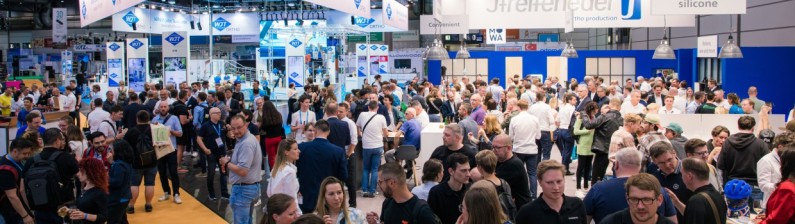
A complex case study developed by Peke Waihanga was shared with an international audience, when Clinical Prosthetist/Orthotist Trudy Perkins presented at OTWorld Congress and Trade Fair in Leipzig, Germany.
With 22,000 attendees and 682 exhibitors, OTWorld is the world's largest event for the orthotics and prosthetics profession, bringing together clinicians, researchers and industry leaders from across the globe.
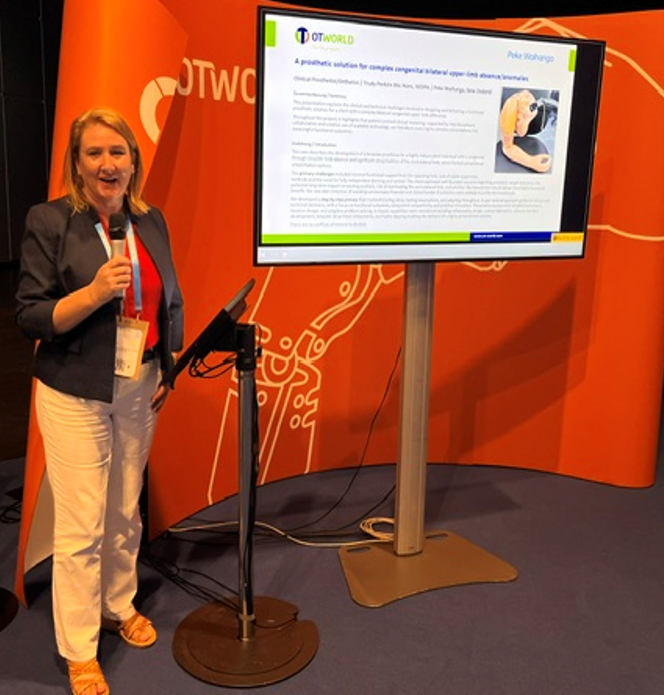
Trudy presenting to an international audience at OTWorld on 20 May 2026.
Sharing New Zealand expertise
Trudy's presentation highlighted how a multidisciplinary Peke Waihanga team developed a customised prosthetic solution for a woman in her 50s who was born with significant upper limb differences and scoliosis. After injuring her only functioning arm in a fall, the patient sought a solution that would reduce the strain on the limb she relied on every day.
Rather than focusing on the latest technology, the team worked closely with the patient to understand her priorities. The patient's goal was function, not appearance. Together, they developed a practical solution using customised design, 3D printing, silicone technology and in-house manufacturing expertise.
Trudy used the opportunity to showcase the unique service model of Peke Waihanga. She highlighted our nationwide multidisciplinary teams of prosthetists, orthotists, technicians, physiotherapists, occupational therapists, nurses, pain specialists and product design experts, all working together to achieve the best outcomes for patients.
She explained how working alongside in-house designers and technicians enabled the team to customise every stage of the prosthesis, creating a solution tailored to the patient's goals rather than simply selecting the most advanced or expensive components.
Collaboration driving better outcomes
A key message of Trudy's presentation was the importance of listening to patients.
"Patients are the experts on their own bodies," she said. "By understanding their goals and concerns, you're far more likely to create a device they'll actually use."
The patient's rehabilitation also included intensive physiotherapy and occupational therapy, demonstrating the value of a coordinated, multidisciplinary approach to care.

A prosthetic solution for complex congenital bilateral upper limb absence/anomalies.
Peke Waihanga being recognised internationally
Trudy's presentations were well received, with delegates congratulating her afterwards and a queue of clinicians forming, wanting advice on managing their own complex upper limb cases.
"I was incredibly proud to represent Peke Waihanga," Trudy said. "People recognised our organisation and remembered our name. It was a fantastic opportunity to share the innovative work we're doing in New Zealand and exchange ideas with colleagues from around the world."
As she explored the exhibition, Trudy found many delegates recognised both her and the Peke Waihanga name after her presentations.
“The whole time I was there I felt so proud of our organisation. It was wonderful to be able to tell people about what we do and show how much expertise we have available to us in New Zealand.”
Bringing ideas back to New Zealand
The congress also provided valuable opportunities to explore emerging technologies and international best practice, with Trudy returning home with some new ideas to share across the organisation.
Peke Waihanga Product Development & Commercialisation Lead, Charlotte Bunnett said attending international events reinforces our organisation’s position as a leader in prosthetic innovation. “It's a great opportunity to see where we sit on the world stage and champion the work we do. People often come back from overseas with a renewed appreciation that what we're doing here is innovative, collaborative and something that's not available everywhere.”
Back