

Peke Waihanga leads New Zealand's first transtibial osseointegration procedure
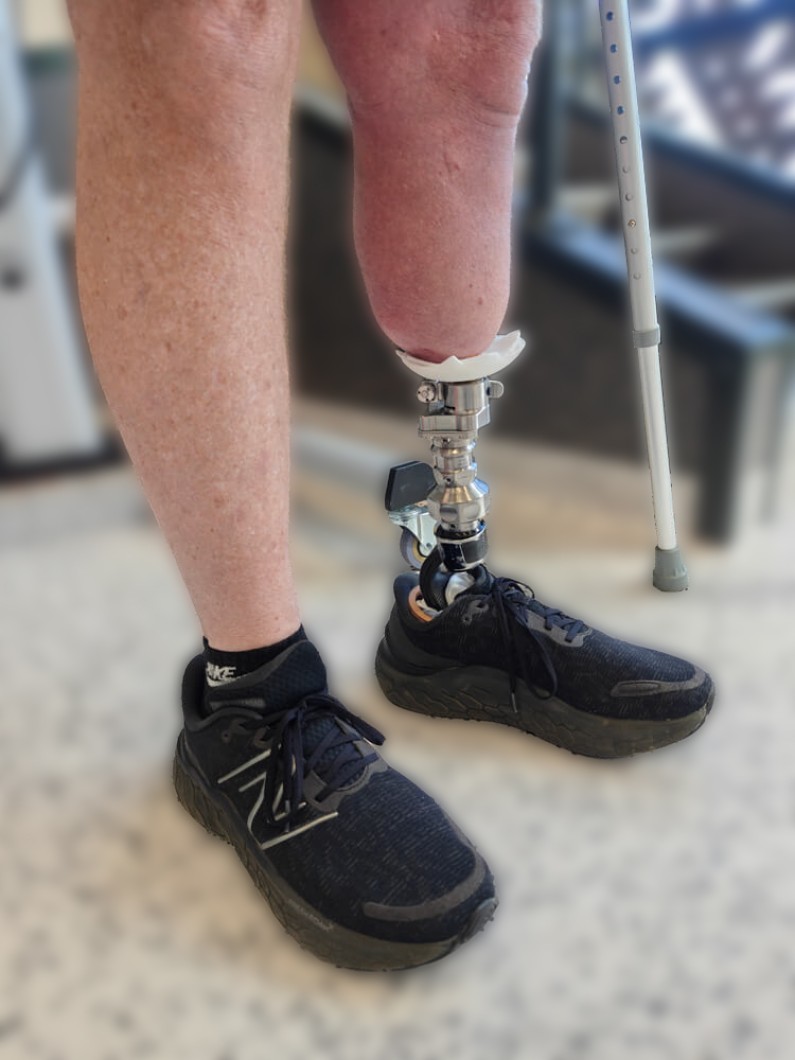
Earlier this year, New Zealand’s first transtibial osseointegration procedure took place, led by a multidisciplinary team out of Christchurch. The team included an orthopaedic and plastic surgeon, prosthetist, physiotherapist, psychologist, and a biomedical engineer, supporting the patient through assessment, surgery, and rehabilitation.
This milestone expands the range of prosthetic rehabilitation options available in New Zealand for carefully selected people with below-knee limb loss who are unable to use a conventional socket prosthesis successfully.
The patient had experienced ongoing socket discomfort and residuum pain, despite multiple prosthetic adjustments and different suspension systems.
Following osseointegration surgery and rehabilitation, the patient experienced complete resolution of socket-related issues, resulting in a marked improvement in quality of life.
The procedure has also reduced the need for appointments at the Peke Waihanga Artificial Limb Service centre for adjustments and socket remakes, meaning less time away from work managing prosthetic-related issues.
Donning and doffing the prosthesis is also easier, supporting greater independence in daily activities. The bone-anchored connection has also improved ground feedback, helping the patient better sense and respond to the surface beneath him.
The Christchurch team said osseointegration is an integral part of prosthetic service delivery in New Zealand. By combining orthopaedic and prosthetic technologies into a bionic solution, this approach has the potential to improve the quality of life for carefully selected patients where traditional methods have not been successful.
Peke Waihanga CEO, Sean Gray said, “Transtibial osseointegration is an important addition to the range of prosthetic options available to this group of patients in New Zealand, particularly for people who have exhausted conventional socket-based solutions.”
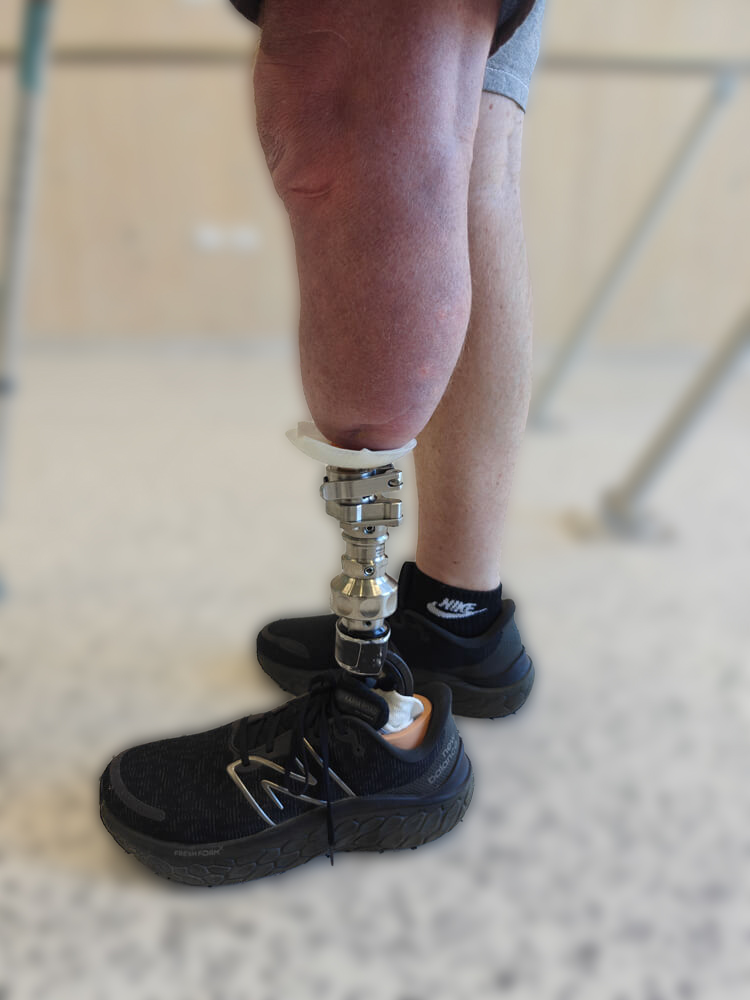
Why osseointegration?
Transtibial osseointegration provides an alternative for people living with below-knee limb loss who have exhausted all options to successfully use a conventional prosthetic socket and instead, continue to experience significant difficulties.
Transtibial amputation refers to an amputation below the knee, where part of the tibia (shin bone) remains. Traditionally, prosthetic limbs are fitted using a socket that wraps around the residual limb. While this approach is effective for many people, others experience ongoing challenges such as discomfort, skin irritation, excessive sweating, poor fit, or difficulty wearing the prosthesis for extended periods.
Osseointegration offers an alternative approach in these cases. The procedure involves surgically inserting a metal implant directly into the remaining bone of the residual limb. Over time, the bone grows around it and integrates with the implant, creating a stable anchor point. The external prosthetic limb then connects directly to this implant via a connector that passes through the skin, removing the need for a traditional socket
Compared with socket-based prostheses, osseointegration transfers weight and movement forces through the skeleton rather than soft tissue. For appropriate patients, this can improve comfort, stability, and prosthesis control, and may reduce common socket-related complications. Some patients also report a more natural sense of limb position and movement, known as osseo-perception.
The procedure is not suitable for everyone. It is generally considered for people who continue to experience significant issues with socket prostheses despite comprehensive rehabilitation and adjustments. Careful patient selection is essential, as the surgery involves a prolonged recovery period, ongoing skin-implant care, and other considerations. Certain activities may be restricted, and the process requires time away from work and daily routines, which may not be feasible for all patients.
Back