

From Lab to Life: Prosthetic Innovation
What does it take to turn an exciting new technology into something that can safely make a real difference for people?
For Peke Waihanga, part of the answer is collaboration. We bring together clinical expertise, research capability and fresh thinking from the next generation of innovators to explore how new ideas can be applied in practice.
This year, we have welcomed a number of university students to Peke Waihanga including international students from Austria and France. Moritz Denk, from the University of Applied Sciences Technikum Wien in Vienna, and Ethan Devoulon, from the Institut Universitaire de Technologie Toulouse in France, spent three months with the Auckland Artificial Limb Service centre for internships with our Research & Development team.
Their projects explored different aspects of prosthetic technology, giving them first-hand insight into how we take promising technology and bring it safely and practically into real-world healthcare.
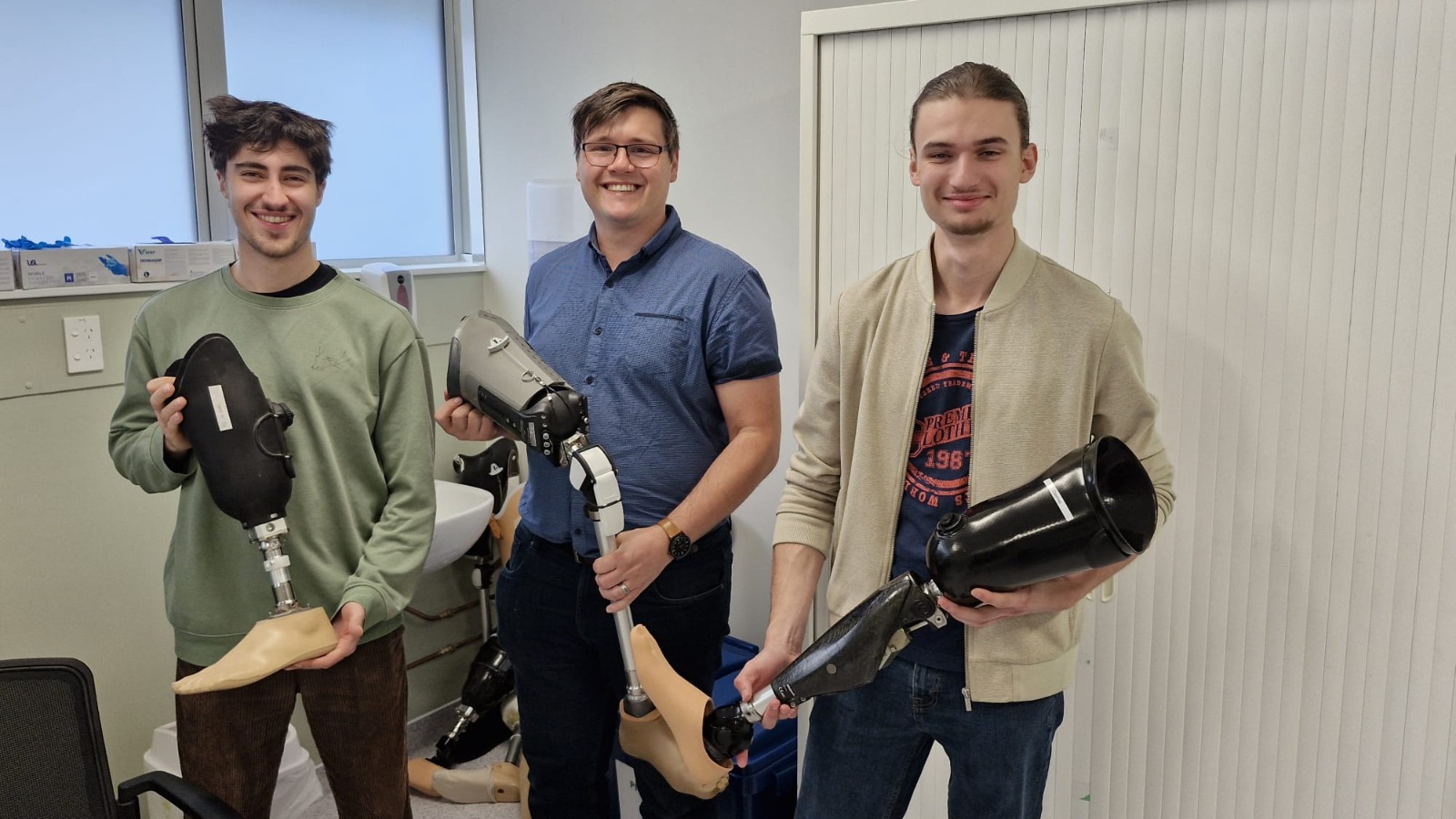
From left to right: Moritz, Dr Schutte and Ethan. After a tour of the newly renovated Auckland Artificial Limb Service centre, the students discuss the wide range of lower limb prosthetic technology. Moritz is holding a 3D-printed transtibial socket, Dr Schutte a cable-controlled transfemoral polymer artificial limb, and Ethan a transfemoral composite socket with a microprocessor knee.
Looking beyond the device
Moritz's background is in sports science engineering, with a focus on biomechanics and physiology. During his internship, he investigated technology transfer requirements for emerging prosthetic products and explored simulation and analysis tools including OpenSim and FEBio.
His work looked at the way people move with an artificial limb and the many variables that can affect mobility and gait.
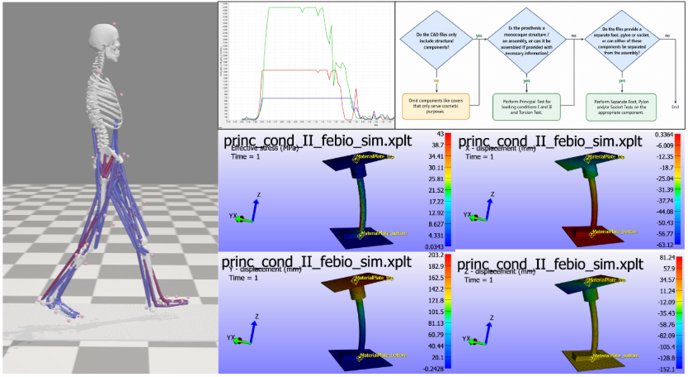
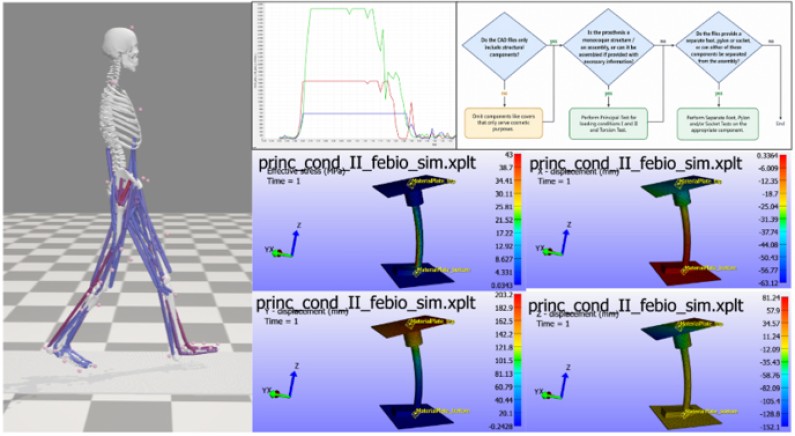
An example of the work Moritz did in reviewing simulation tools that allow us to measure the performance of both our products and the effects on residual anatomy.
“Every person’s journey is different,” says Research & Development Engineer Dr Juan Schutte. “Understanding those differences is important in developing more effective ways to support clinical decision-making, while providing tailormade solutions for each individual patient.”
Rather than looking at a prosthetic device in isolation, Moritz explored the interaction between the device and the person using it. This included considering the dynamic forces involved in mobility and the changing needs of people throughout their rehabilitation and longer-term use of an artificial limb.
His project aligns with our research pillar, ‘Limbs Reimagined’, which explores the safe implementation of new products and processes to improve outcomes for people with limb loss in Aotearoa New Zealand.
Where innovation meets reality
Ethan's project looked at another part of the challenge.
With a focus on mechanical and mechatronic systems, he explored the complex biomechanics involved in modern biomechatronic prosthetics. This included investigating the loading forces that influence the size, weight and materials used in functional devices.
The project also looked beyond engineering.
For new technology to become a viable clinical solution, there are practical questions to answer. How much does it cost to manufacture? Can it be produced at scale? What evidence is needed? How does it fit into existing clinical practice? And what do clinicians and other stakeholders need to know before they can confidently use it?
These questions are particularly important in healthcare, where new technology must meet high expectations for safety and reliability.
Innovation doesn't stop at invention
3D printing is a good example.
There are significant opportunities for 3D printing in prosthetic and orthotic care, but introducing a new manufacturing method is not simply a matter of proving that a device can be printed.
Healthcare professionals are understandably cautious about adopting new technology when people's safety and wellbeing are involved. New approaches need to be thoroughly tested, understood and supported by appropriate processes and evidence.
Peke Waihanga is actively working through these challenges as it develops and implements new technologies. This includes applying robust safety protocols, working within relevant standards and considering how innovations can be introduced into clinical practice in a way with confidence for clinicians and patients.
For Ethan, understanding this process was an important part of his internship.
His work explored what it takes to move from an innovative idea to something that people can actually use. This included understanding the information stakeholders need, the barriers to adoption and how technology needs to be introduced into an existing healthcare environment.
This connects closely with our organisation’s research pillars, ‘Seeing Action’ and ‘Tailoring User Experiences’. These pillars focus on enabling people to engage with technology and developing solutions around individual needs and goals.
Bringing different expertise together
For Moritz and Ethan, the internships offered an opportunity to work on problems that are difficult to replicate in a university environment.
They were introduced to new tools and approaches, while also seeing first-hand the complexity of prosthetic product development and clinical practice.
For Peke Waihanga, the benefit works both ways.
“Having students with different backgrounds and perspectives working alongside us brings new ideas into our R&D programme,” says Dr Schutte.
This is the value of university collaboration: combining academic knowledge and research capability with clinical experience and real-world problems.
It also creates opportunities to develop research that can potentially lead to new products.
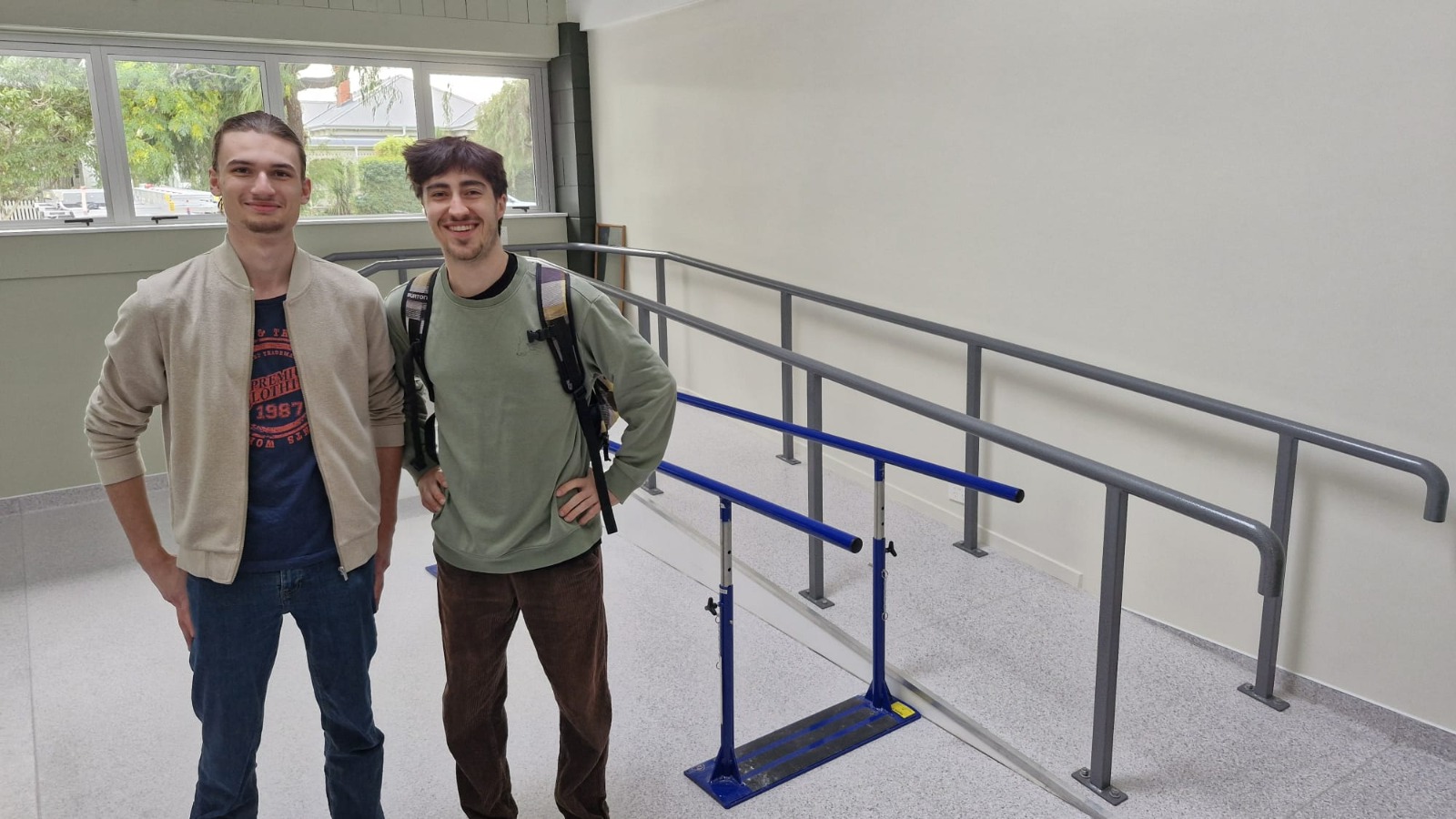
Ethan and Moritz were shown the consultation and rehabilitation facilities at the Auckland Artificial Limb Service centre. They learned about the real-world requirements clinicians consider when evaluating prosthetic solutions and how prescriptions may need to be adapted to each individual patient.
Open to new ideas
Peke Waihanga is keen to build more relationships with universities, students and researchers, both in New Zealand and internationally.
“We have capacity to support people from a wide range of disciplines,” says Dr Schutte. “You don't have to be studying prosthetics or orthotics. If you're passionate about healthcare, technology and making a difference to people's lives, there may be an opportunity to work together.”
Peke Waihanga is particularly interested in people who want to tackle the difficult problems involved in replicating the functions of the human body, improving mobility and developing technology that can be safely translated into clinical practice.
These partnerships are about more than hosting internships. They help build research capability, develop new knowledge and create practical pathways for innovation.
“We are always interested in hearing from universities, students and researchers who want to collaborate with us on real-world challenges in prosthetic and orthotic care,” said Dr Juan Schutte. If you are interested in an internship, research project or collaborative opportunity, please contact Dr Schutte at juan.schutte@nzals.co.nz.
Back